


16 December 2025
On the 16th December, Spearfish hosted a webinar that examined Nigeria’s evolving security environment, focusing on the withdrawal of Nigeria Police Force Mobile Units (MOPOL), rising regional instability, and the practical implications for organisations operating in or travelling to Nigeria.
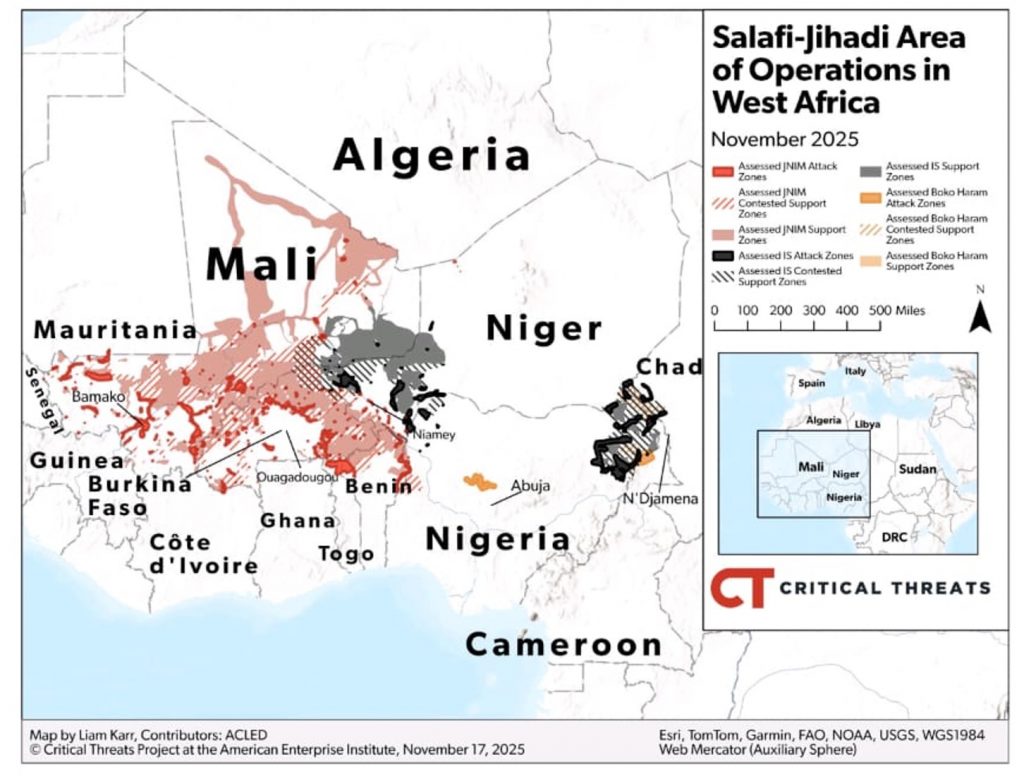
Regional Context and Threat Landscape
Speakers highlighted a deteriorating security environment across West Africa and the Sahel, driven by:
- Recent and attempted coups in Mali, Burkina Faso, Niger, Guinea-Bissau, and Benin
- The emergence of the AES bloc and withdrawal of Western security support
- Reduced intelligence-sharing and counter-insurgency capacity
This has allowed jihadist and criminal groups to expand operations southwards into coastal states and western Nigeria, increasing cross-border instability.
Armed Groups Operating in Nigeria
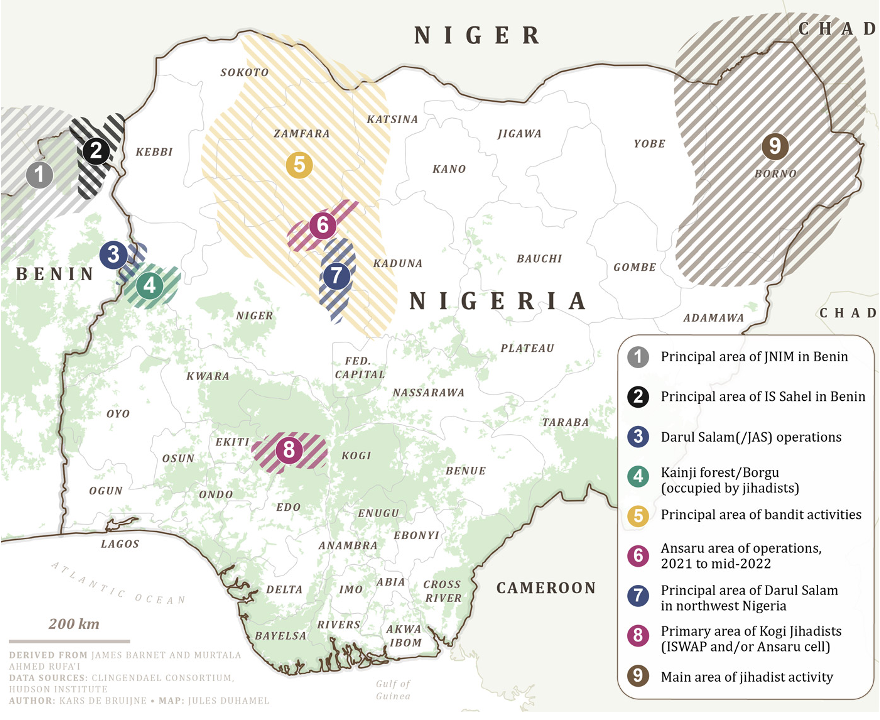
Nigeria currently faces activity from 80+ armed groups, ranging from:
- Internationally affiliated groups (AQ/JNIM, ISWAP, Islamic State Sahel Province)
- Localised criminal, bandit, tribal, and ideological groups
Threats vary by region but include:
- Banditry and kidnapping in the North West and North Central states
- Continued insurgent activity in the North East
- Expansion into previously lower-risk states (e.g. Kano, Jigawa, Kwara)
Groups are increasingly agile, using motorcycles, forest hideouts, and rapid hit-and-run tactics, with widespread use of kidnapping for funding.
MOPOL Withdrawal – Practical Impact
The withdrawal of an estimated 70,000–100,000 police officers from VIP and private duties has created significant security gaps:
- Police were heavily overstretched prior to the decision
- Responsibility has shifted to the Nigerian Security and Civil Defence Corps (NSCDC), which is already under-resourced
- Demand for escorts and protection now exceeds available capacity
The policy is being actively enforced by the Presidency and is unlikely to be reversed in the short term.
Implications for Travel and Operations
Speakers stressed that organisations can no longer rely on armed escorts as a default mitigation. Instead, emphasis must be placed on:
- Early and detailed journey planning
- Advance route reconnaissance and security risk assessments
- Strong stakeholder and community engagement
- Robust communications planning (multiple networks, radios, tracking tools)
Urban movements are more manageable than inter-state road travel, which remains high risk due to bandit and militant capabilities.
Private Security & Emerging Approaches
Private security companies are adapting by:
- Strengthening journey management and intelligence preparation
- Increasing coordination with local security actors and communities
- Exploring the controlled use of non-lethal deterrent systems for urban and township environments
However, speakers cautioned against the unchecked proliferation of weapons and the risks posed by poorly trained vigilante groups.
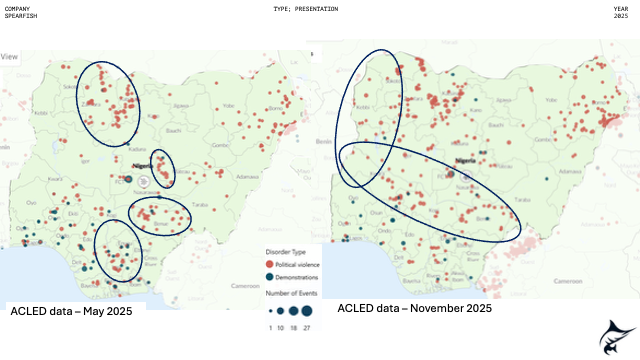
Outlook for 2026
While government efforts to reform the security architecture are ongoing, speakers agreed that:
- Insecurity is likely to expand before it improves
- Economic pressures, unemployment, and regional instability will continue to fuel armed group activity
- Preparedness, early planning, and self-protective measures are essential for organisations operating in Nigeria
Key Takeaway
Nigeria remains a viable operating environment, but risk is increasingly localised, fluid, and complex. Success depends on understanding regional dynamics, avoiding over-reliance on any single security measure, and adopting layered, proactive risk management approaches.


Comments
Leave a Comment